The post The Top 5 Episodes of The Knowledge Project 2019 appeared first on Farnam Street.
]]>
Through conversations, we are able to learn from others, reflect on ourselves, and better navigate a conscious life.
The goal of our podcast, The Knowledge Project, is to help you think, reflect, and better understand the complexities and interconnections in the world in which we live.
If done right, listeners should walk away from episodes with a deeper understanding and a renewed sense of curiosity. Of course, not all of the conversations or guests will appeal to everyone. And that is the point. We consciously want to explore the thinking, ideas, and methods of thoughtful people to deepen our understanding, challenge our ideas, and gain a broader perspective.
Of the 23 interviews that we published in 2019, these are the top five (as measured by downloads in the first 30 days):
- #62 Cracking the Code of Love with Dr. Sue Johnson — Dr. Sue Johnson is a researcher, clinical psychologist, and the developer of EFT or Emotionally Focused Therapy. In this interview, we discuss how to create, protect, and nourish fulfilling sexual and emotional relationships.
- #68 Putting Your Intuition on Ice with Daniel Kahneman — In this fascinating episode of the Knowledge Project Podcast, Psychologist and Nobel laureate Daniel Kahneman reveals the actions we can take to overcome the biases that cripple our decision-making, damper our thinking, and limit our effectiveness. Listen and Learn from the master.
- #57 Decoding Difficult Conversations with Sheila Heen — Two-time NY Times best-selling author, consultant, and lecturer at Harvard Law School, Sheila Heen makes the tough talks easier by breaking down the three layers that make up every difficult conversation.
- #67 Keeping the Flywheel in Motion with Jim Collins — An earnest student and powerful teacher, mega best-selling author Jim Collins goes under the hood and shows what all enduring companies have in common. We talk luck, leadership, and business longevity.
- #60 Leading Above the Line with Jim Dethmer — Jim Dethmer, founder of The Conscious Leadership Group, shares practical advice about becoming more self-aware, ditching the victim mindset, and connecting more fully with the people in our lives.
One episode that just missed the cut but warrants your attention is #71 Cultivating Desire with relationship expert Esther Perel.
Thanks for listening, Because of people like you sharing our show with friends, family, and colleagues, we crossed 12 million downloads this year and were selected as “Best of” Apple Podcasts in 2019.
Subscribe on Apple Podcasts | YouTube | Spotify | Overcast | Google Podcasts
Want more? Last year was a great year for the podcast as well. Here are the top 5 episodes from 2018.
The post The Top 5 Episodes of The Knowledge Project 2019 appeared first on Farnam Street.
]]>The post The Best of Farnam Street 2019 appeared first on Farnam Street.
]]>Reading helps us to think, feel, and reflect — not only upon ourselves and others but upon our ideas, and our relationship with the world. Reading deepens our understanding and helps us live consciously.
Of the 31 articles we published on FS this year, here are the top ten as measured by a combination of page views, responses, and feeling.
How Not to Be Stupid — Stupidity is overlooking or dismissing conspicuously crucial information. Here are seven situational factors that compromise your cognitive ability and result in increased odds of stupidity.
The Danger of Comparing Yourself to Others — When you stop comparing yourself to others and turn your focus inward, you start being better at what really matters: being you.
Yes, It’s All Your Fault: Active vs. Passive Mindsets — The hard truth is that most things in your life – good and bad – are your fault. The sooner you realize that, the better things will be. Here’s how to cultivate an active mindset and take control of your life.
Getting Ahead By Being Inefficient — Inefficient does not mean ineffective, and it is certainly not the same as lazy. You get things done – just not in the most effective way possible. You’re a bit sloppy, and use more energy. But don’t feel bad about it. There is real value in not being the best.
How to Do Great Things — If luck is the cause of a person’s success, why are so many so lucky time and time again? Learn how to create your own luck by being intelligently prepared.
The Anatomy of a Great Decision — Making better decisions is one of the best skills we can develop. Good decisions save time, money, and stress. Here, we break down what makes a good decision and what we can do to improve our decision-making processes.
The Importance of Working With “A” Players — Building a team is more complicated than collecting talent. I once tried to solve a problem by putting a bunch of PhDs in a room. While comments like that sounded good and got me a lot of projects above my level, they were rarely effective at delivering actual results.
Compounding Knowledge — The filing cabinet of knowledge stored in Warren Buffett’s brain has helped make him the most successful investor of our time. But it takes much more than simply reading a lot. In this article, learn how to create your own “snowball effect” to compound what you know into opportunity.
An Investment Approach That Works — There are as many investment strategies as there are investment opportunities. Some are good; many are terrible. Here’s the one that I lean on the most when I’m looking for low risk and above average returns.
Resonance: How to Open Doors For Other People — Opening doors for other people is a critical concept to understand in life. Read this article to learn more about how to show people that you care.
More interesting things, you might have missed
- We published volume 1, General Thinking Concepts, of our Great Mental Models book series. You can learn more about the project here and purchase the book on Amazon
- We discussed our book series and how mental models can change the world in a feature in The Economist
- We updated our list of 109 mental models
- Here are all the books we recommended this year
Thank you
As we touched on in the annual letter, it’s been a wonderful year at FS. We are looking forward to a wider variety of content on the blog in 2020 with a mix of deep dives and pieces exploring new subjects.
Thank you for an amazing 2019 and we look forward to learning new things with you in 2020.
Still curious? You can find the top five podcast episodes in 2019 here. Our Best of Farnam Street archive can be found here.
The post The Best of Farnam Street 2019 appeared first on Farnam Street.
]]>The post Farnam Street’s 2019 Annual Letter to Readers appeared first on Farnam Street.
]]>At their best, these letters represent an opportunity for the people entrusted to run the company to communicate with the people who own the company, the shareholders.
At Farnam Street, we are obsessed with you, our readers. You trust us with something far more valuable than money: your time. Reading Farnam Street or listening to The Knowledge Project means you’re not doing something else. Our job is to make sure your investment in us is getting an above-average return.
I write our letter each year. As you’ll see, there is no shortage of mistakes and lessons learned this year. (You can find past letters at the following links: 2015, 2016, 2017, and 2018.)
***
Brain Food (email newsletter)
Our newsletter mailing list has grown to roughly 250,000 subscribers from 185,000 at this time last year. That’s about a 35% increase in the headline number of readers over last year.
The number is somewhat irrelevant, however, if you don’t know how many people are actually opening the emails. I’m pleased to say our open rate is about 40%. This is down from last year’s 45% but well above the industry average of 20%.
We use a number internally called “effective readers,” which takes the number of email subscribers multiplied by the average open rate to provide us with the number of people who are laying eyes on our content. Last year this equation worked out to be 185,000 × 0.45 = 83,250. This year, it was 250,000 × 0.4 = 100,000. While not too shabby, this 20% growth in effective readers is still far less than 35% growth in the headline number of readers.
Like most of you, I get really busy from time to time. When I’m busy, I am more likely to unsubscribe from things—not because I didn’t get value from them but rather because I just needed to focus, and yet another email was a distraction at that point in time. With this in mind, we created something we’d never seen before. Rather than have you unsubscribe from Brain Food, we now give you the option to take a 30-day break from the newsletter. With one click, we can now temporarily unsubscribe you and see you again in 30 days.
You’ve probably noticed that we’ve been experimenting with pop-ups on the website. That could be one reason open rates are down slightly, as people that have little friction to sign up for emails rarely value our content as much as people who go through a bit of effort to sign up. Right now, the pop-ups are being used more to test wording that resonates. Expect them to mostly disappear soon.
Farnam Street Blog
Around this time last year, we were the 33,000th most popular website in the world. As I write, we’re the ~25,000th most popular site. This isn’t a number we put a lot of weight into as we’re typically in the 27,000–33,000 range. While it seems like we’re not moving up much, it takes a lot to stay in the same place.
One noticeable change that we’ve seen is that the site is easier to share now because of our new URL, canvasly.link, rather than the old one (farnamstreetblog.com).
While we made small changes to the aesthetics of the website in 2019, you might see slightly more noticeable ones in 2020 aimed at improving the reading experience and the overall experience on mobile.
We published 31 new articles this year. The following list includes some samples that we’re particularly proud of:
- How Not to be Stupid
- The Danger of Comparing Yourself to Others
- Yes, It’s All Your Fault: Active vs. Passive Mindsets
- Getting Ahead By Being Inefficient
- How to Do Great Things
- The Anatomy of a Great Decision
- The Importance of Working With “A” Players
Events
In 2019, we offered two public Re:Think Workshops, one on innovation and one on decision-making. Two years ago, these events sold out in a week. Last year, these events sold out in a day. This year it took under 4 hours for the first and under 90 minutes for the second to sell out entirely. (Join the waiting list on this page so you don’t miss out on future dates!)
While we make many small changes every year, we made two this year that involve how people arrive at our events that I wanted to highlight. First, our sales page doesn’t make it easy to tell your boss the “five things you’re going to learn” from our workshops, so getting approval means you have to do some work; second, all tickets are non-refundable and non-transferable. Our goal with these changes was to have an event where everyone wanted to be there, and it works. The motivation and quality of attendees is amazing.
The events are small by design. Fifty people is about the maximum number of folks you can get to know over our short time together. The reason so many events are bigger than fifty people is economics. Events have high fixed costs, and once you hit about fifty people, anyone else you can sell a ticket to is mostly profit. However, putting more people in the room doesn’t make for a better experience for the participants.
Rather than increase the number of people, we’ll be increasing the number of events. We will be running four events in 2020, and they’ll be even better than before, as we’re making a significant upgrade to the content.
We’re also exploring a mega-event in 2021 aimed at bringing together speakers that are not commonly found together.
The Knowledge Project
The Knowledge Project produced nearly a show every two weeks this year! Guests this year included Josh Wolfe, Celeste Headlee, Laura Markham, Howard Marks, Jason Fried, Scott Page, Daniel Gross, Gabriel Weinberg, Thomas Tull, Shelia Heen, Jim Dethmer, Jonathan Haidt, Sue Johnson, Hugh Howey, Greg Walton, Shep Gordon, Emily Nagoski, Jim Collins, Daniel Kahneman, Steve Schwarzman, Scott Adams, Esther Perel, and Neil Parischa.
Last year around this time, we had forty-seven published episodes and 4.8 million downloads. This year we stand at seventy two published episodes and over 11 million downloads. In a world full of sound bites, people are growing to appreciate our deep and nuanced conversations with insightful guests and experts from a wide variety of disciplines. This month, we were honored to be recognized as one of Apple Podcasts’ “Best Listens of 2019”.
The podcast increased in subject diversity this year as we started to explore more areas of life. In 2019, we dove into topics like parenting, sex, and relationships. You can expect that the podcast will continue to explore a wider variety of content than the blog. Upcoming shows dive into anxiety and adversity with psychotherapist Barry Michels, design with legendary car designer Frank Stevenson, and math with professor and mathematician Steven Strogatz.
We did choose not to air an episode this year. I agonized over this decision for weeks and everyone on the team scrambled to try and make it work, but I ultimately pulled the plug. While it’s never fun to send an email to a guest and say we’re not going to air the show, in some cases it’s the best thing to do. The guest would have been unhappy with the show, and since we couldn’t hit the depth we strive to achieve, our listeners would have been unhappy as well. To make it a bit easier in the future to not air a show if need be, we now tell guests we promise to record but not necessarily air the show. This is a production decision. (If you’re curious, only one guest has asked us not to air a show that we’ve recorded, and that was because they felt they revealed too much of their secret sauce.)
Speaking of production, we started editing episodes a little bit for length and flow. Before episode 64, we rarely edited anything. Some episodes, like Jim Collins’, required virtually no editing. Others are pared from two to three hours of recording down to an hour or so of air time.
However, we’ve made the choice to back off on the editing a bit, so you might notice a bit more meandering in the future. We’ll continue to play with this in the future on an episode-by-episode basis to make sure we get the right feel. We’re not artificially trying to make our episodes any predetermined length of time. If we record three hours of gold, you’ll get three hours of gold.
We’re always on the hunt for amazing people and would love to explore more Eastern thinking as well as feature more amazing women. If you know anyone interesting and insightful in line with our previous guests, please drop me a line at [email protected]. While I can’t reply to all inbound messages, I will reach out if I’m interested.
Social media
You can follow us on Twitter, Instagram, Facebook, and now Farnam Street TV (FSTV) on YouTube.
If you’re curious about how we tackle social media, follow us on YouTube and watch as we try to add value in a noisy world.
Courses
We spent a lot of time and effort on a learning course in 2019 that we ended up parking for the time being. We think we have most of it right; however, there was something that just wasn’t working right now. While it sucks to put something on hold after investing a lot of time and effort in it, I expect we’ll come back to this sometime in the near future.
We began work in 2019 on a course we think you’re going to love that’ll come out hopefully in late 2020 or early 2021.
The three mini-courses we’ve already done (The Art of Focus and The Art of Reading being the main two) are now part of the Learning Community. We don’t anticipate making bigger courses part of the Learning Community in the future but will likely continue to do smaller ones inside it.
The Learning Community
We have no aspirations of running the biggest membership community on the planet—just the best. Our Learning Community isn’t for everyone, and yet we continue to collect remarkable people from all walks of life, including entrepreneurs, Fortune 50 CEOs, professional coaches and general managers, athletes, students, teachers, Nobel laureates, authors, and more. We’re brought together by our shared kindness, curiosity, and desire to help one another become more effective.
Not only is the Learning Community a way to support what you love (FS!), join our virtual reading group, get transcripts to all of our podcasts, participate in monthly AMAs with authors, access exclusive meetups all over the world, and so much more—it’s a way to become part of an online community that wants to get better without the shortcuts. A lot of members find the private forum a way to get answers on anything from what book to read next to career and relationship advice.
If you find value in Farnam Street, we hope you’ll consider joining the Learning Community or gift it to the ones you love. Plus, when you join, you’ll also be helping the planet. Since Learning Community members read so many books, we thought it only fitting that we donate a portion of every membership to plant more trees so our forests stay nice and healthy.
If you’re curious, we offer gift memberships and discounts for teams. Visit here for more details.
Books
I’ve been talking about books for three years—and they finally happened. Not only did they finally happen, but we hit The Wall Street Journal’s best-seller list for The Great Mental Models Volume One: General Thinking Tools. To our surprise, the book should be translated and available in a few countries by the end of 2020.
I wrote these words last year and have to eat them:
“There is some bad news, if you’re eager to get your hands on a physical copy. We’re only printing 3000 physical copies. . . . I don’t have an easily explainable answer to why only 3k hardcovers, so I won’t even try to explain it. Learning Community members will know about the physical copies first and get first dibs.”
While we gave away 3,000 copies of the original hardcover to the Learning Community in a feat of logistics I never wish to repeat, a friend of mine, Matt Mullenweg of Automattic Inc., reached out after receiving his copy and asked us to print more and make them more widely available.
After a bit of persuasion, I agreed to partner with Automattic on the book, make a few changes, and reprint the hardcover in another limited run. We printed another 7,000 books, and when they’re gone, they’re gone.
Book two should be out before March. It’s printing as you read this. Book three should be available before the end of 2020. One small note: we’ll be printing fewer hardcovers for book two than book one, and fewer still for book three than book two. (Sales in series tend to decline as volumes increase, and we have no desire to store books for a year while they sell down.)
All of the content in the Great Mental Models series will eventually be available for free on the internet at some point in the future. You can read more about the project and what we’re trying to accomplish here.
There are three main criticisms of the The Great Mental Models Volume One: General Thinking Concepts, listed as follows:
- The audio is dry.
- The book is too short.
- The content on the website is so good, why pay for the book?
Let me try to address these briefly.
- The audio is dry. Yes, it is. There are two main issues with this. First, the way I read the book wasn’t good enough. That’s on me. Second, it’s a reference book, and reference books don’t tend to make good listening to begin with, so audiobook professionals would be much better narrators. We’ve offered to have the audio re-recorded at our expense but have no control in whether that happens. The rest of the books in the series will be read by a professional.
- The book is too short. You can’t please everyone. I hate reading books that are too long more than I hate reading ones that are too short. We didn’t want to waste your time and take what should be 40,000 words and make it 80,000 because it feels like you got more. That’s the type of trickery we shy away from. (With that said, book one is by far the shortest book in the series.)
- The content on the website is so good, why pay for the book? I’m not even sure where to begin with this one, as we’ve promised to put all the content of the book online at some point in the future.
The Trade Book
I signed a book deal with Penguin Portfolio in 2018 for a trade book and am beyond excited to be working with the team there, especially Niki Papadopoulos. I’ve wanted to work with Niki ever since she came to one of our events four years ago. I’m busy working away on this book which, assuming I hit my deadlines, comes out in 2021.
Team Farnam
Vicky is our new operations ninja who does nearly everything behind the scenes better and more effectively than anyone I’ve ever met. Devon is leading the charge on our Learning Community, making it more valuable for members. Rhiannon is my partner in crime on the Great Mental Models books. Last but not least, Rosie is helping us with research and more.
Sponsorships
“Most sponsorships are a screaming bargain compared to traditional media buys, particularly if you’re trying to reach an elite or elusive [audience].” —Seth Godin
Now is the perfect time for your company to reach a highly influential audience of decision-makers. There are a number of reasons to consider a sponsorship over the traditional pay-per-click model, including the following:
- This is the best way to reach our audience. Farnam Street readers are educated, affluent, and leaders in their fields. Our readers trust us, and we work hard to earn that trust. That trust extends to our site’s sponsors. Becoming a Farnam Street sponsor allows you to reach this target audience directly, maximizing your value per view.
- It offers you affiliation with the best. Farnam Street is widely considered to be one of the best websites on the internet. Sponsoring Farnam Street will increase your company’s credibility in the eyes of existing and potential clients. We’ve seen this over and over again with past sponsors from Slack to Metalab.
- It inspires your organization. When your employees find out you’re sponsoring Farnam Street, they’ll see that you share similar values and are committed to lifelong learning. One CEO called his company’s response “The Farnam Effect” after he got over twenty positive emails from staff and customers after sponsoring us.
Our website sponsors in 2019 were Royce Investment Partners and Greenhaven Road Capital.
Our podcast sponsors in 2019 were Metalab and Mealime.
Our newsletter sponsors in 2019 were Royce Investment Partners, Greenhaven Road Capital, Atoms, Masterworks, Brave, IVPN, Revtown,Legacy, The Information, MUD/WTR, Tulco, Alpha Sense, Ideo U, Ladder, Vollebak, and kaam.work.
If you’re interested in partnering with us in 2020, send me an email at [email protected].
Ethics
I take your trust in Farnam Street and in me very seriously. This is exemplified by the following:
- We are not paid by any company for any opinion or article posted on Farnam Street or in any public forum, including podcasts, Facebook, YouTube, or Twitter.
- We receive free products all the time in the mail. If we use them and like them, we try to tell people about them—there are no affiliate links.
- Farnam Street participates in the Amazon Services LLC Associates Program, an affiliate advertising program designed to provide a means for sites to earn advertising commissions by linking to Amazon. Simply put, if you click on our Amazon.com links and buy anything, we earn a small commission, yet you don’t pay any extra.
- Sponsors of our newsletter and website are not allowed to run any code that might track your internet presence. Website sponsors operate on a percentage-of-traffic basis and do not compensate us based on page views. This helps align our incentives with yours.
- We do not have a Facebook tracking pixel, so we’re not enabling companies to target our audience.
- We don’t give out your email address to any third parties.
We’re not always perfect, but we try to be transparent and keep our promises.
Thank you
I’m looking forward to a wider variety of content on the blog in 2020 with a mix of deep dives and pieces exploring new subjects.
Thank you for letting me learn with you.
Shane
The post Farnam Street’s 2019 Annual Letter to Readers appeared first on Farnam Street.
]]>The post The Best of Farnam Street 2018 appeared first on Farnam Street.
]]>Reading helps us to think, feel, and reflect — not only upon ourselves and others but upon our ideas, and our relationship with the world. Reading deepens our understanding and helps us live consciously.
Of the 46 articles we published on FS this year, here are the top ten as measured by a combination of page views, responses, and feeling.
- Smarter, Not Harder: How to Succeed at Work — We each have 96 energy blocks each day to spend however we’d like. Using this energy blocking system will ensure you’re spending each block wisely.
- Your First Thought Is Rarely Your Best Thought: Lessons on Thinking — Most people have no time to think. They schedule themselves like lawyers. They work in five- to eight-minute increments, scheduled back to back. They think only in first thoughts never in second thoughts.
- The Pygmalion Effect: Proving Them Right — The Pygmalion Effect is a powerful secret weapon. Without even realizing it, we can nudge others towards success. In this article, discover how expectations can influence performance for better or worse.
- First Principles: The Building Blocks of True Knowledge — First Principles thinking breaks down true understanding into building blocks we can reassemble. It turns out most of us don’t know as much as we think we do.
- Understanding Speed and Velocity: Saying “NO” to the Non-Essential — It’s tempting to think that in order to be a valuable team player, you should say “yes” to every request and task that is asked of you. People who say yes to everything have a lot of speed. They’re always doing stuff but never getting anything done. Why? Because they don’t think in terms of velocity. Understanding the difference between speed and velocity will change how you work.
- The Surprising Power of The Long Game — In everything we do, we play the long or the short game. The short game is easy, pleasurable, and offers visible and immediate benefits. But it almost never leads to success. Here’s how to play the long game.
- Double Loop Learning: Download New Skills and Information into Your Brain — We’re taught single loop learning from the time we are in grade school, but there’s a better way. Double loop learning is the quickest and most efficient way to learn anything that you want to “stick.”
- Complexity Bias: Why We Prefer Complicated to Simple — Complexity bias is a logical fallacy that leads us to give undue credence to complex concepts. Faced with two competing hypotheses, we are likely to choose the most complex one.
- Deductive vs Inductive Reasoning: Make Smarter Arguments, Better Decisions, and Stronger Conclusions — You can’t prove the truth, but using deductive and inductive reasoning, you can get close. Learn the difference between the two types of reasoning and how to use them when evaluating facts and arguments.
- The Decision Matrix: How to Prioritize What Matters — The decision matrix is a powerful tool to help you prioritize which decisions deserve your attention as a leader, and which should be delegated. Here’s how you can start using it today.
More interesting things, you might have missed
- We published mini-profiles on Seneca, Nassim Taleb, Charlie Munger, Marcus Aurelius, Peter Bevelin, Garrett Hardin, Richard Feynman, and Robert Cialdini
- We published our principles
- We published a helpful guide to making smart decisions and avoiding bad ones
- We updated our list of mental models, expanding to defining 109 of them
- A complete list of the ~75 books I read in 2018
Thank you
As we touched on in the annual letter, it’s been a wonderful year at FS. While the frequency of our articles decreased in 2018, the words published actually increased. As longtime readers know, we are not bound to frequency or length constraints, our only mission is quality. Next year will see a more eclectic mix of content as we get back to our roots.
Thank you for an amazing 2018 and I’m looking forward to learning new things with you in 2019.
Still curious? You can find the top five podcast episodes in 2018 here.
The post The Best of Farnam Street 2018 appeared first on Farnam Street.
]]>The post Farnam Street’s 2018 Annual Letter to Readers appeared first on Farnam Street.
]]>Stewards of companies have a legal duty to do what’s in the best interest of shareholders. I feel a similar obligation to you. You trust me with something far more valuable than money: time.
For all of us, time is finite. Reading Farnam Street or listening to The Knowledge Project means you’re not doing something else. My job is to make sure your investment is getting an above-average return.
***
The Psychology of Email Lists
Our newsletter mailing list has grown to roughly 185,000 subscribers, compared to 155,000 at this time last year.
The map and the territory tell very different stories. To understand the difference, we need to understand email lists a bit better.
Email lists are the best way to reach people directly. With email, there are few barriers between the content creator and the reader. Getting into someone’s inbox is like getting into their bed: it requires an invite.
The world is full of companies that want you to sign up to their email list. These actors use pop-ups, free downloads, and other tricks to bribe you for your email. While they do this for numerous reasons, few actually concern you, the reader. They just want to sell you something.
For individuals, big email lists typically mean big egos or bigger paychecks.
Bigger egos—in the sense that the size of the mailing list is a metric by which people keep score. Sometimes this is unspoken; other times it’s fairly overt. Some comparison is natural, but there is a lot of appearance over substance going on. No one wants to be the little piggy in the straw house.
Bigger paychecks—in the sense that people use lists as a proxy for value. I’ve encountered this firsthand in 2018, while negotiating our book deals (more below). Everyone wanted to know our list size, but few wanted to know the open rate. If the list size is the map, the open rate is the territory.
The industry considers a 20% open rate to be good, for an email list of over 100,000 addresses. I think that’s terrible. It means about 20–25% of people actually open your emails, when you account for the plethora of adblockers and image loaders it means actual open rates are slightly higher than reported rates.
Our open rate used to be 35%—and now it’s about 45%. The difference is telling. A list of 150,000 with a 25% open rate reaches an effective audience of about 37.5k people per email. An open rate of 45% changes that to 67.5k per email. Clearly, not all lists are the same.
At FS, we’re not after the biggest list, just the best. We offer a one-click unsubscribe. And if it looks like you haven’t opened an email from us in a while, we will send you a few emails to see if you want to stay on the list. If you don’t engage, we’ll proactively remove you. If you miss us, you can always sign up later—and if you don’t notice, well, you’re breaking my heart.
canvasly.link
We’re on our third or fourth iteration of domain names now.
We started with 68131 (the zip code for Berkshire Hathaway), then moved to farnamstreetblog.com and now canvasly.link. While we started out as a blog or scratchpad, today we’re so much more than a blog. We’re moving our branding toward FS. Why did we move away from Farnam Street blog to canvasly.link? In short, it was easier to type, available to us, and our friends at Automattic made it simple for us to switch.
We changed hosting companies this year. Our new hosts, Pressable, sped up the site. Most importantly, they freed me up to write, instead of spending hours a month on webhosting. If you’re looking for a webhost, they are the most competent and proactive we’ve come across.
Our relative ranking among websites continues to improve. Last year we were ranked among the 40,000 most popular sites in the world—out of hundreds of millions. As I write this we have moved into the top 33,000. And in the US, out of an estimated 200 million active websites, we rank in the top 11,000. That’s the top .006%, for those of us who are counting.
I hope to further refine the reading experience on the website in 2019, become a bit more brand-consistent, and better position FS to create something that outlives me.
News
I received a curious call from a reporter from the New York Times earlier this year, asking, “Why does everyone on Wall Street keep talking about you?” He found my “I don’t know” rather unsatisfying, and kept probing. The result was this profile on me. While we stayed on the most-emailed list for two full days—an eternity in the news world—the best thing about the story was that my mom doesn’t think I’m unemployed anymore.
My hometown paper also featured me in this article. Lest I get a big head, my mom pointed out that I couldn’t get ahead of “cat stops traffic” and “man walks slowly across street” to make the most-viewed stories of the day.
Events
In 2018, we offered two public Re:Think Workshops, on Innovation and Decisionmaking. We continue to limit attendance at these events to ensure a good experience for everyone. We sold out the 2019 version of Re:Think Decisionmaking in one day. Join the waiting list so you don’t miss out on future dates!
While the feedback we get is positive beyond belief, we’ll be doing a major revamp of the content in 2019 to be released in 2020.
Our two smaller events are exceptional, but they’re not for everyone. We also require that you apply to attend these events because we need to ensure we have the right mix of people.
The first, Think Weekend, is a dinner series. We meet for a Thursday–Sunday period in a warm location during winter. The days are free time, and we have an interesting series of dinner conversations.
The second is Re:Think Europe. Here we have 10 people show up for what’s been called “the most unique experience I’ve ever had.” It’s an intense period in close quarters with ten people that start out as strangers but wind up best friends. People walk away mentally stimulated and exhausted, while making tangible progress on problems they have.
The Knowledge Project #ListenAndLearn
The Knowledge Project moved away from being “the most irregular podcast in the world” to presenting a new episode about every other week—about 25 episodes this year. Our 2018 guest list included FBI hostage negotiator Chris Voss, learning expert Barbara Oakley, Stripe CEO Patrick Collison, obstacle course super champ Amelia Boone, poker pro Annie Duke, Shopify CEO Tobi Lütke, and the CEO of the JP Morgan, Amazon, and Berkshire Hathaway healthcare initiative, Atul Gawande, to name a few. (You can find the full list here.) The lineup for 2019 looks just as good.
As I write this we stand at 47 published episodes with over 4.8 million downloads. You should know that we’re not bound to bi-weekly episodes. Our only commitment is quality, so we don’t pre-commit to frequency or duration. Some of the shows will be 15 minutes and others will be four hours. We rarely edit conversations, unless it’s requested or we feel it’s important to protect the guest. To put things in perspective, only two or three instances come to mind. My assumption is that if I’m still interested in the conversation, you are too.
I know what you’re thinking: can you sit and talk for four hours with one person, with no interruptions? Yes! Our guests are exceptional people, and I’m a fanatic when it comes to listening and learning.
The Knowledge Project isn’t bound to have me as a host. In the future, we will explore having other hosts.
We guided TKP’s branding on a sharp turn for the better this year, and will continue in 2019. We invested a lot of money in these improvements—they don’t increase revenue for us but do make for a much better product and experience for you.
We’re likely to move away from sponsors to a listener-supported model in the near future. While we’ve had some great sponsors, like Metalab, I increasingly find that sponsors want things from me—really from you—that just don’t align with my principles.
Speaking of which, let’s talk about some of that stuff. I take your trust in FS and in me very seriously.
- I am not paid by any company for any opinion or article posted on FS or in any public forum, including podcasts and Twitter. I receive free products all the time in the mail (over 200 in 2018!). If I use them and like them, I try to tell people about them—no affiliate links. If you’re wondering what this looks like in practice, I think I mentioned two things this year: Atoms and Bellroy. I wear the Atoms every day in the office, and Bellroy has been my wallet forever. It’s the same one I buy for my friends.
- Farnam Street participates in the Amazon Services LLC Associates Program, an affiliate advertising program designed to provide a means for sites to earn advertising commissions by linking to Amazon. Simply put, if you click on my Amazon.com links and buy anything, I earn a small commission, yet you don’t pay any extra.
- Sponsors of our newsletter and website are not allowed to run any code that might track your internet presence. We tell them nothing about you except in broad strokes. Website sponsors operate on a percentage-of-traffic basis and do not compensate us based on page views. This reduces our incentive to increase page views and write crappy content.
- We do not have a Facebook tracking pixel, so we’re not enabling companies to “target our audience.”
- We don’t give out your email address to any third parties.
- If you’re interested in sponsoring the newsletter, podcast, or website, feel free to reach out to us at [email protected] or directly to me at [email protected].
Courses
A few years ago, we started offering courses to help people with skills that make them more adaptable. We were more concerned with outcomes than income. To that end, I purchased most of the most popular online courses and took a look at how they worked, what they were selling, and how they went about improving outcomes.
Unfortunately, we didn’t learn a ton from these courses. Most university courses are theory-based, which is great but not practical. Most of the online courses offered by entrepreneurs are edu-tainment around selling stuff—like online courses. This didn’t deter us. We took a different approach, working through iterations until we hit on something that finally worked: one-on-one interaction.
If you did the homework in The Art of Focus last year, which was a daily email to me, we responded and problem-solved with you every step of the way. Most of the time it was me responding. While this wasn’t efficient or scalable, it was certainly effective. These weren’t group calls but one-on-one interaction. That was just one of the lessons that we learned about how to increase the odds people actually made changes that stuck.
Now that we know what works and what doesn’t, we can tackle a few more ambitious ideas around courses.
In our history, we’ve offered three online courses, a productivity webinar, The Art of Focus, and The Art of Reading. We’ve stopped selling two out of three of these, and will stop selling The Art of Reading in January 2019. (The Art of Focus will be available as part of the Learning Community in January, and the productivity webinar is already available to members.)
Here’s a sneak peek: we’ve been working on a mega-course on learning for over a year. It has taken a long time to cover not only the theory behind how we learn and how your brain processes information, but how to put it into practice. The wait will be worth it! We’ll use what we learned in the previous courses to increase the odds of success for participants.
I’ve tested the concepts with a few people I’m close to, and the response I’ve gotten is nothing short of amazing. Here’s a representative sample from my testing: “Shane, no one has ever taught me how to learn. In under an hour, you changed everything from the types of questions I ask other people to dramatically increasing my ability to quickly learn…nothing will be the same again.” That’s unsolicited feedback, three months after our conversation, from a person who wanted to test the course for me and paid for it on spec. No videos, just one hour with me in a restaurant over dinner.
The Learning Community
Rest assured, we have no aspirations of running the biggest membership community on the planet, just the best. The Learning Community isn’t for everyone. Our growing Learning Community continues to collect remarkable people and includes entrepreneurs, Fortune 50 CEOs, professional coaches, athletes, GMs from all the major leagues (NFL, NBA, NHL, and MLB), students, teachers, Nobel Laureates, and bestselling authors.
The learning community isn’t about more content but better content. Not only is it a way to support what you love (FS), join our virtual reading group, get transcripts to all of our podcasts, and so much more—it’s a way to join and interact with a group of people like you, who want to get better and smarter without the shortcuts, a group that offers everything from reading recommendations to smart parenting advice. Some of my favorite moments this year, has been when someone posted questions about a book to the community forum and the author, an LC member, responded.
Importantly, if you read the website for free, it’s funded by the Learning Community. While there are some exclusives and some bonus FS content for LC members, the majority of FS content will always be free. If you find value in Farnam Street, we hope you’ll consider joining the Learning Community, or gift it to the ones you love.
Books
Last year I wrote this:
“As many of you know, we’re huge fans of mental models. The problem is that when I set out to read about mental models years ago, there wasn’t a good source of information in one place. Where could I find timeless ideas to help me learn, think, and decide?
Farnam Street has filled that void for many, but we’ve been inundated with requests to write a book about mental models. The first volume, internally dubbed Thinking Tools, will be released soon. Rather than being a version of the website, it’s a fresh start at intelligently preparing ourselves for the world. Whether readers are high school students or newly retired seniors, this well-designed book will hopefully have a place on their shelves for generations.”
I have to eat those words. And I have some other confessions to make.
Writing a book and publishing a book are two very different things. The writing was done and fully edited in May. However, then we had to learn how to actually publish a book. That’s where the time and effort really come into play. There are a lot of publishing decisions around books—everything from typeface and layout to paper and design. You have to decide on the style, not just for one book but for the planned series of 5. Then you have to decide where to print, how to sell them (it’s not as easy as sending them to Amazon), how many to print, whether you want electronic copies, audio, and a host of other things.
Let’s talk a little about the series of books that we’re publishing under Farnam Street: The Great Mental Models.
The first physical book was designed from the beginning to be a beautiful reference book. In a world of disposable books, I didn’t want this to be a book you bought and threw away. I wanted to be the last book on your bookshelf.
Just because we’re self-publishing doesn’t mean we can’t have a world-class team. Our creative director for the project, Morgwn Rimel, came by way of setting up the School of Life. We love working with Flok Design, an international design firm based in Germany. Illustrator Marcia Mihotich is insightful—we love her style. We also had a great editor, Néna Rawdah, and proofreader Karina Palmitesta.
While we self-published to maintain control over the content, thanks to the team above it will look and feel better than most traditionally published books in every way. If you’re curious as to what it looks like on the inside, you can see here and here.
There is some bad news, if you’re eager to get your hands on a physical copy. We’re only printing 3000 physical copies.
The reaction from my agent was telling.
“Shane, so let me understand this right, if you had demand for another 1k books you wouldn’t print more?”
“Not unless something changes.”
“So you don’t want to make more money.”
“Not off the physical book.”
[Two minutes of silence.]
“I’ve never heard that before.”
I don’t have an easily explainable answer to why only 3k hardcovers, so I won’t even try to explain it. Learning Community members will know about the physical copies first and get first dibs.
Why will I be able to get an audio copy before eBook copies?
Long story short: Audible came to us and said they wanted to partner with us, and offered us a lot of distribution and promotion. Helping more people with critical thinking outweighs having the physical and print books out sooner. We’re excited to work with Stacy Creamer and the team at audible.
I am hesitant to sell the print and electronic rights, because I think holding them gives us flexibility in the future. I want all the content to eventually be free, because that helps our mission of equalizing opportunity: the people who can’t afford books arguably need access to thinking tools more than the people that can. And we want to experiment with things that would have been really hard to do with a traditional publisher.
The FS brand carried the day at every meeting we had with people interested in the audio rights. There wasn’t a person we talked to who wasn’t familiar with FS, and in every room where it was pitched, people said, “I love that website.” That helps.
In short, the mental models books are coming. The first draft of the second book is almost done. The books will come out as soon as I can get them to you without sacrificing quality or distribution. As soon as we know more I’ll let you know.
A Trade Book
I signed a book deal with Penguin Portfolio for a trade book and am beyond excited to be working with the team there, especially Niki Papadopoulos. I’ve wanted to work with Niki ever since she came to one of our events four years ago. While this contract was for one book, I have four high-quality and unrelated book ideas in the queue.
Stay tuned.
Team Farnam
Perceptive readers know there is more to Farnam Street than just me. While I might be the face of FS for now, the site you are reading is increasingly about a team of people.
The team includes Rhiannon, who is a full-time staff writer and my right hand, working with me on the mental models books. Devon is our jack of all trades, doing most of our copy for courses, marketing emails, and podcast production. Bri is my part-time assistant.
Next year, two more will join the fray: one person in January to help us research, and another person in October to lead the team to the next level. I wasn’t looking for people, but the opportunity arose to hire two amazing humans, so I pounced.
Sponsorships
I want to thank our website sponsors Royce Funds, Tulco., and Greenhaven Road Capital. I’d also like to thank our podcast sponsors Metalab, HeathIQ, and Inktel. If you’re interested in sponsoring us, send me an email at [email protected].
A Better Way to Sell Your Business
If you’ve built a profitable business with a reputation for fanatical customer service, I’m interested in becoming your partner.
Through Syrus Partners, a company we started to mirror Berkshire Hathaway on a micro scale, we made several investments last year. They included Mealime and Paragon Intelligence—where my background comes in handy.
We’re looking to partner with companies that have a reputation for honest and fair dealings, consistent earnings, good returns on capital, and straightforward business models. As an investment partner, we’re not interested in flipping the business, taking control, or leveraging it up. We bring permanent capital, simple and fair deals that can close in 4–8 weeks, and a reputation for letting you do your thing. We’re always available to help with anything—our team consists of people with world-class experience in marketing, branding, sales, and technology, not to mention an extensive Rolodex. Simply put, we offer as much or as little help as you want. We want you to keep doing what you’re doing.
We’re not VC, so please no pitches for business ideas. If you’ like to explore selling all or part of your business to a trustworthy and long-term partner, send an email to [email protected] with all relevant details.
Thank you.
We continue to put one foot in front of another and reinvest the proceeds from the Learning Community to create the best content we can.
Next year we’ll get back to more variety of content. There will be a mix of deep dives on topics as well as explorations. In short, back to our roots. We lost a bit of focus on that in 2018, which is entirely on me.
There is much good to come from FS in the new year. I look forward to continuing to learn with you. Thank you for reading and supporting us.
Shane
The post Farnam Street’s 2018 Annual Letter to Readers appeared first on Farnam Street.
]]>The post Farnam Street’s 2017 Annual Letter to Readers appeared first on Farnam Street.
]]>To a large extent, I consider you the owners of Farnam Street, but you trust me with something far more valuable than money: time. For all of us, time is finite. Reading Farnam Street means you’re not doing something else. My job is to make sure your investment is getting an above-average return.
***
In almost every reader-related metric, 2017 was a record year.
Readership increased over 40%, which was decent. We surpassed 155,000 subscribers to our weekly newsletter, Brain Food. Tempering this excitement is the fact that email open rates dipped slightly. (We’ve reached the limits of our current mail provider and will be transitioning at some point, likely in Q1 or early Q2, to another provider. For readers, the transition should be seamless.)
Last year I wrote about how most sites try to hijack your animal responses by using outrage to acquire traffic. We’ve never set out to consciously “acquire” an audience. Our readers tell their friends, family members, and co-workers and we grow slowly. I’m okay with that. I write for the million “me’s” out there.
Visitors continued to spend more time on the site (a good proxy for how interested people are in the content). The bounce rate (a fancy phrase for the percentage of people who look at one page and then leave the site) continued to move in the right direction. In short, we had more people who read longer and looked at more pages. Next year we’ll to a better job mixing in some shorter articles.
***
Thanks to Grain and Mortar, we completed a significant revamp of the website that has made it cleaner and easier to navigate. Our looks are finally starting to catch up to our content, a happy difference from what happens with people over time.
***
Events
In 2017, we offered two public Re:Think Workshops (Innovation and Decision-Making). We continue to limit attendance at these events to ensure a good experience for everyone. We sold out the 2018 version of Re:Think Decision-Making in only two weeks. Join the waiting list to hear about events first.
One of the most surprising things about the events for attendees is that they get to meet people who are curious, kind, and intelligent. In short, people just like them. The quality of the individuals continues to impress me. In 2017, we had attendees from WordPress, Adobe, Amazon, Shopify, Risebar, Red Bull, Satori Capital, United Way, Convexity Capital, and more.
This summer, we also held our first Think Week event in Europe (Paris, to be specific), and it was a hit. We’ll be doing at least two of these events next year: one in the Bahamas (sorry already sold out) in February and one in Europe in the summer. (These events vary in intensity, so read carefully before signing up. The event in the Bahamas will be low key, more of a “read all day and let’s meet at dinner to discuss interesting things” gathering, whereas the Europe one will be way more intimate and intense.) Because these events are so small, I’ve decided that people will have to apply to come. If you’re going to spend 30 hours with someone over three days, cramped in my apartment, you want to know that I’ve curated the audience.
The Knowledge Project
What a difference a year makes. Despite having the most irregular podcast in the world, we had over 1.5 million downloads this year. To put that in perspective, we released only 10 episodes this year. The quality of our guests is amazing, as you can tell from the interviews with Naval Ravikant, Rory Sutherland, Adam Grant, Ray Dalio, Susan Cain, Gary Taubes, and more.
We already have a terrific roster lined up for next year. I’m aiming to release a new episode once every three to four weeks instead of once every six to eight weeks. Given the intensity of the research that goes into The Knowledge Project guests, I have no idea how other shows release episodes with the frequency they do.
Tools and More
About four years ago, we started to purchase online courses to see what was going on. As students, we didn’t like what we saw, which was a lot of entertainment and not a lot of outcome changes. So, we set to work and created three courses over the last three years, testing various ways to improve outcomes. Through various iterations, we’ve landed on a formula that consistently delivers results for people.
Productivity That Gets Results, our popular productivity seminar, has been closed (we’ve stopped selling it). However, members will have access to it starting in January.
The Art of Reading (—I dropped the ball on this one — my team and I worked really hard updating the content and adding new resources for our students…and then I didn’t tell anyone. I am a terrible marketer.) This course will show you how to sift through information more quickly, squeeze the best ideas out of any book or article, and absorb what you read so you can access that knowledge for years to come.
The Art of Focus is being offered for sale until early January and then I’m closing it for good (update 2019: This is now free for members). The course was a smashing success, but the accountability element takes considerable time. (Note: If you join the program before it closes, you’ll still get all the feedback, support and open access to the course that previous students enjoy. You’re grandfathered in forever.)
I’ve started working on a new course. You’re going to love it.
The Learning Community
The quality of our members—from entrepreneurs and Fortune 500 CEOs to professional coaches, athletes, and bestselling authors—remains remarkable. We’ve really hit on something that delivers.
Last year I said that we would use some of the proceeds from the Learning Community to improve the quality of the regular, free content. To that end, we hired our first professional editor in July, and the overall quality of our content has gone way up.
In 2017, I started a weekly email to members of the Learning Community. It’s a short bit of content that is more practical than that in our blog posts.
Rest assured, the majority of FS content will always be free. If you find value in Farnam Street, we hope you’ll consider becoming a member. Now you can give a membership to your smart friends and loved ones.
Team Farnam
Perceptive readers know there is more to Farnam Street than me. Behind the scenes is an evolving team and freelancers who make things happen.
This fall, Jeff told me that he wanted to pursue another opportunity. Jeff joined Farnam in November of 2015, and his contributions have been many. Jeff has never been one to stand up and brag about what he’s done, but he’s a great friend.
Sponsorships
I want to thank our main 2017 sponsor, Royce Funds. Other supporting sponsors included Greenhaven Road, Tiny, 2CV, Elysium Health, Ray Dalio and Principles, the Heath brothers, Adventur.es, and Syrus Partners.
Royce Funds, Greenhaven Road, Tiny, Syrus, and Elysium will be back in 2018. We still have a few open slots for next year, so if you’d like to inquire about sponsoring the blog, please get in touch with me.
2017 Report Card
Last year I wrote, “In 2017, we will work to better synthesize, connect, and explain timeless ideas that help you make better decisions, avoid stupidity, and kick-ass at life. I’ll try to add more personal stories and anecdotes from my journey.”
I’m pleased but not satisfied with our results.
True to our tagline, we’re focused on mastering the best of what other people have already figured out. I always have a hard time with personal stories, though, because I never view the content as being about me. In fact, any of the ideas that you come across on the site that are useful are not mine. I have started opening up about my experiences a bit in the Learning Community, and that has been well received.
I also told you that we’d find great guests for our podcast, The Knowledge Project, increase the value proposition for Learning Community members, and work on some books. Yes, books.
As mentioned earlier, we’ve found amazing guests for the podcast. I’m still the same me, but it turns out that once your audience reaches a certain size, the ratio of “yes” responses to “no” responses inverts. So to all of those people who don’t like the dedicated email about the podcast, remember that it helps us get better guests (and, because it’s sponsored, pays the bills).
Creating value for members of our Learning Community is a tricky proposition, summed up in the words of one member: “I get so much value from your free content that I joined the learning community as a means to support what you’re doing. I didn’t realize there was so much more practical value in the learning community. … What I value most is that you respect my time and don’t make anything longer than it needs to be.” In 2017, we started sending weekly emails that are more practical in nature to the Learning Community. We have many more things coming up for the LC in 2018.
As many of you know, we’re huge fans of mental models. The problem is that when I set out to read about mental models years ago, there wasn’t a good source of information in one place. Where could I find timeless ideas to help me learn, think, and decide?
Farnam Street has filled that void for many, but we’ve been inundated with requests to write a book about mental models. The first volume, internally dubbed Thinking Tools, will be released soon. Rather than being a version of the website, it’s a fresh start at intelligently preparing ourselves for the world. Whether readers are high school students or newly retired seniors, this well-designed book will hopefully have a place on their shelves for generations.
***
You Are What You Consume
The people you spend time with shape who you are. As Goethe said, “tell me with whom you consort and I will tell you who you are.” But Goethe didn’t know about the internet. It’s not just the people you spend your time with in-person who shape you; the people you spend time with online shape you as well.
Tell me what you read regularly and I will tell you what you likely think. Creepy? Think again. Facebook already knows more about you than your partner does. They know the words that resonate with you. They know how to frame things to get you to click. And they know the thousands of people who look at the same things online that you do.
When you’re reading something online, you’re spending time with someone. These people determine our standards, our defaults, and often our happiness.
Every year, I make a point of reflecting on how I’ve been spending my time. I ask myself who I’m spending my time with and what I’m reading, online and offline. The thread of these questions comes back to a common core: Is where I’m spending my time consistent with who I want to be?
Am I reading things that challenge me and make me want to be a better person, or am I spending too much time on topical things that are meant to entertain me? If you read indiscriminately, you’re wasting vast amounts of time.
Am I spending my time with people who are consistent with who I want to be as a person? Are they constantly learning? Are they generous and kind? Are they challenging me and calling me out on my bullshit?
These are not easy choices. However, hard decisions about whom you hang around with and what information you consume changes your vector and your velocity. Hard choices make for better decisions, more free time, and a better understanding of reality.
Think about dating. We seem to understand that happy people and unhappy people don’t generally get along. If you’re a happy and ambitious person and you go on a first date with someone who hates their job, complains about past partners, and generally wants to zone out of life, you instantly feel repelled by this person. You know, subconsciously, that this attitude is highly contagious and needs to be removed from your life before it spreads. The longer you’re in contact with people like this, the more likely you’ll become them.
What we don’t understand is that this principle applies to whom, or what, we spend our time with online as well. If you consume shallow content, then before you know it, you’ll have shallow opinions. If you’re not careful, the world will become black and white rather than various shades of grey.
Most of what we spend our time with online doesn’t make us better, but rather shouts at us and distracts us. And most of it is just bullshit click-bait anyway, with no more depth than a book summary on Amazon.
Consider:
- The article on how to network like a boss offers advice on how to get ahead by thinking of people in terms of what they can do for you. After all, if they can’t do something immediate and gratifying for you, the next person is just a swipe away. Not only does this kind of behavior make you more likely to be selfish, but it also misses the point of networking altogether, which is to spend time with people who think better than you do and connect with them in meaningful ways.
- The article on how to get a promotion shows you how to position yourself for favorable optics. Not only does this mean that you’re going to spend more of your time demonstrating how much value you deliver and less of your time delivering value, but it’s also going to make you less likely to get along with your co-workers.
- The article on how to become more productive was written by someone who has no idea of what your life is actually like. And it focuses on how to do email faster instead of on how to do less email, so you only end up getting better at moving widgets. And here’s the thing: when you’re better at moving widgets, your reward is to move more widgets. And if you’re moving more widgets, you never have time to do something better.
Think about it. If the person writing the article churns out an article a day on 200 subjects a year, how much are you really going to learn from them? You have to consider both the content you’re getting and the sources. Are the writers fluent in their subjects? Are they well read? How credible are they?
Not to mention, a vast swath of what we consume makes us miserable. So much of what we are surrounded by is fake happiness. We want people to think we’re happy when we’re not. The louder and more frequently someone says their partner is “just the most amazing person in the whole world,” the more I suspect relationship issues. When we only see other people having happiness — real or fake — our minds trick us into thinking that we’re the only ones who are struggling. So we hide it, and by hiding it, we become more isolated and alone.
Increasingly, the feeds we follow show us an endless array of people having a good time, traveling, partying it up, and more. Individually, our friends might be able to do this once a year, but when you follow a few hundred accounts, you’re virtually assured that on any given day, one of those people is doing something marvelous. This makes us feel like crap: Why can’t I keep the house clean, pick up the kids, and not feel rushed all the time? Why do they have so much free time? Why didn’t they invite me? I want to be there. Why are those people always happy? How did they get so successful? I work just as hard as they do. And so on. We are surrounded by unrealistically positive expectations, which just remind us of what we don’t have: free time, money, an obsessively healthy lifestyle, diamonds, and a soul mate.
Nothing looks the same again. We feel alone. It seems like other people are nothing but successful and we do nothing but struggle. As our misery increases, we hide our struggles more and just show others the good stuff. Only it’s not real; we’ve just become part of the crowd of people pretending there is no struggle.
Well, I hate to break it to you, but I’m human. I struggle. A lot. Here’s what you miss with the curated feeds: In the past year alone, I’ve been on my couch crying; I’ve been betrayed by a close friend; I’ve tried and failed to develop a relationship with my biological father; I’ve had days when I think it would be easier to win an Olympic gold medal than to get my kids to school without losing my patience; I’ve been so exhausted that I can barely keep my eyes open; I’ve looked at a sink full of dishes and said “not tonight”; and there is so much more. The point is, you might see the results, but you don’t see the struggle. And when you see only the best in others, without seeing the reality of others, you are nudged toward thinking less of yourself.
So if your Facebook feed is full of happy people doing things that make you feel bad about your life, either change the feed or be conscious of the fact that everyone struggles from time to time but not everyone lets you see it. Be aware of how what you’re seeing affects you. And remember that the people you allow into your life, both in person and online, are the people you will end up becoming.
Curate carefully. Choose people who add value to your life and meaning to your relationships. And stop giving a damn about what other people think.
***
As I wrote last year, “Velocity is a vector-dependent concept. Moving in two directions that are not 100% aligned creates drag.”
While I still said yes to too many things in 2017, I’m getting better at saying no. The best thing I did this year was to switch my default to “no” for all meetings. If I can’t say no, I schedule the meeting for the afternoon. If I have to do it in person, I make it close to my office.
What helps me say no to meetings? Some simple tests: Am I willing to have this meeting right now? Would I rearrange my calendar for this meeting? If I’m not willing to sacrifice something, even something small, for the meeting, maybe it’s not worth having.
Thank you for your continued time and trust in me and Farnam Street. I will continue to try to earn it.
—Shane
(See what a difference a year makes. You can find the 2016 letter here.)
The post Farnam Street’s 2017 Annual Letter to Readers appeared first on Farnam Street.
]]>The post Farnam Street’s 2016 Annual Letter to Readers appeared first on Farnam Street.
]]>Most public companies issue an annual letter to shareholders. These letters present an opportunity for the people entrusted to run the company on behalf of the shareholders to communicate with the people who own the company.
Last year I started a similar tradition at Farnam Street. To a large extent, I consider you the owners of Farnam Street.
Investors, or owners, typically exchange money for shares in a company. I think your investment in Farnam Street is just as important —You trust me with something far more valuable than money: Time.
For all of us, time is finite. Reading Farnam Street means you’re not doing something else. My job is to make sure your investment is getting an above average return.
***
2016 was a record year in almost every reader-related metric.
Readership increased approximately 20 percent, which was decent. We surpassed over 100k readers to our weekly newsletter, Brain Food (OK, that’s a pretty awesome milestone. I might have even celebrated with a bottle of champagne … or two.)
Visitors spent more time on the site (a good proxy for how interested people are in the content). The bounce rate (a fancy phrase for the percentage of people who look at one page and then leave the site) continued to move in the right direction. In short we had more people who read longer and looked at more pages.
***
I think we all know that readership increased in spite of our website design, rather than because of it. Luckily, we’re tackling that problem next year thanks to the fine folks at Grain and Mortar. I can’t wait for you to see the new site.
***
I’m often asked how we grow our audience. My simple answer is met with skepticism: Our readers tell their friends and coworkers. That’s it.
This is usually followed by an endless slew of unsolicited advice on how to “exponentially increase our growth.” A typical example is the “reward” for generating controversy.
A lot of websites create controversy intentionally. They want nothing more than for 50% of their audience to love an article and 50% to hate it. Why? Because both sides will dig in and then they will talk about it. When they talk about it they’ll link back to the original site, thus driving traffic (and, even more perverse, as a byproduct of how most search engines work, these arguments typically increase search engine rankings).
You almost can’t help but admire the cleverness of this strategy, which takes advantage of hard wired defaults both in humans and search to gain an advantage. This strategy is so common these days it’s not even divergent — it’s the norm!
However easy that play is, intentionally creating controversy to get pageviews isn’t a strategy you’ll find us employing to grow quickly. While it is important to account for arguments from all sides, we’ll stick to our knitting.
While we’re open to new ideas and ways to increase the value for readers, we’re not open to gimmicks or short term strategies. We’d rather be a tree that digs its roots deep, grows slowly, and can’t be easily blown over.
***
Events
In 2016, we offered two public Re:Think Workshops (Innovation and Decision-Making) and private versions too. We continue to limit attendance at these events to ensure a good experience for everyone.
One of the most surprising things about the public events is that people get to meet people who are curious, kind, and intelligent. In short, people just like them.
The quality of individuals who attend these events continues to blow my mind. This year we had attendees from Github, Tuft and Needle, AJO, Glimmer of Hope, Warburg Pincus, Rackspace, Inspire Environmental, and two difference branches of U.S. Special Forces, to name a few.
Last year, if you recall, I was worried that we were spreading ourselves too thin with respect to the variety of topics we took on. Reducing the number of offerings in 2016 was the right thing to do as it allowed us time to relaunch the website ReThinkWorkshops.com as well as make significant improvements to the content of both Re:Think Innovation and Re:Think Decision-Making.
Our next event is Re:Think Decision-Making in Seattle this March. I hope to see you there.
Podcast
The Knowledge Project, our podcast, reached over 350,000 downloads. Which doesn’t sound like a lot until you consider that we release about one episode a month. Things on this front will largely stay the same for the time being. We already have some exceptional guests lined up for early in the new year.
Tools and More
Productivity That Gets Results (update 2019: this is now free for members), our popular productivity seminar, continues to help people avoid the traps that get in the way of being productive. We want to help you spend more time doing what you want to be doing.
The Art of Reading launched to some great feedback and success at helping people improve their information consumption. Yes, we made a course about reading.
We spend so much of our time reading these days — whether it’s email, articles, blogs, books, or reports. The dividends to getting even 5% more effective at remembering, knowing when to skim, and connecting ideas becomes a non-linear outcome.
To my knowledge, our course on reading is the only significantly student-tested course that has worked for executives, teachers, students, NFL Coaches, best-selling authors and more. But we’re making it even better.
We undertook a significant effort over the past few months to materially improve The Art of Reading, which will relaunch in as soon as the video editing is done. (There is no reason to wait to purchase it if you’re interested, existing customers will have access to all the new content for free.)
I don’t want to spoil the other things we’re working on in this space but we’ve made progress on two addition products. The first one is seminar based and should be out soon. The second is larger in ambition and scope and I’ve never seen anything like it. My hope is that we can launch this in the fall as we’ve already delayed a year to make sure we’re getting it right.
Learning Community
Online media properties are continuing to look for ways that create and capture value. The problem here is that most of these organizations want to capture more value than they create — they focus on the wrong side of the equation. This leads to a short-term engagement between creator and audience, as the latter realizes they’ve been had and moves on. Farnam Street tries to take the opposite approach: Add so much value that people want to support it.
Recently, we’ve started to incorporate some of the lessons we’ve learned running a membership program for a year back into the offering. The most apparent is that we’ve moved away from calling it the membership program and are now call it a learning community. This phrase (and our subsequent activities) bring the program much closer in line with what we are trying to create for our readers.
Last year I said that we would use some of the proceeds from the learning community to improve the quality of the regular, free, content. I think we delivered on that this year and I look forward to pushing even more next year. (And every year.)
Rest assured, the majority of FS content will always be free. If you find value in Farnam Street, we hope you’ll consider joining the learning community.
***
Team Farnam
Perceptive readers know there is more to Farnam Street than me. Last year we reached the point where I couldn’t do everything I wanted to do myself so Jeff Annello came on board. Jeff and I have worked together in the past, and I value both our friendship and the quality of thought he brings to the table. There are a lot of ideas I want to try and lots of great things to come, and we’ll continue to work with exceptional people as we go along.
***
Sponsorships
I want to thank our lead sponsor for 2016: Slack. I’ll also welcome our incoming sponsors Royce Funds, Greenhaven Road Capital, SparkBox, adventur.es, and Grain and Mortar (who are currently in the process of redesigning the site). We still have one open spot, so if you’d like to inquire about sponsoring the blog please get in touch with me.
***
2016 Report Card
Last year I offered a way to judge our progress. Let’s quickly review what I wrote so I can hold myself accountable.
Here is what you can expect and hold us accountable for in 2016:
The quality of all content will be much higher. We will do better at adding context, presenting ideas in compelling ways, adding tools to your mental tool box, making things practical, and exposing you to mental models that will help you be better at what you do. We’ll further our exploration of what it means to live a meaningful life and deepen our understanding of ourselves and the world.
The Re:Think workshops will offer a better experience. While everyone has described their experiences so far as off the charts, I see so much room for improvement that it’s hard to fathom how we’re exceeding expectations. Everything from onboarding and hotel options to the overall experience while at the event will be improved. We have an amazing team in place for the events. They consistently sell out.
The audio quality on the podcast will be much improved. I’ve already taken care of this to a large extent. Where possible, I’ll do more in-person interviews as these offer more meaningful and deeper conversations.
The experience of existing readers will not be compromised to add new readers. For a large part of the year there was an annoying little pop-up that appeared on the screen asking for your email address. This was a mistake. While it helped us grow at about 2500 readers a month, it’s annoying to some and degrades the reading experience for all. You deserve better. I fumbled here and hopefully recovered. I was aware of how annoying it was and failed to act. The allure of 100,000 readers is a strong pull — especially when my mother reminds me that her “small town” (my words, not hers) has more people than I have readers. Anyway, the pop-up is off now.
The site will function better. We will be seeking to engage a web designer in 2016 or 2017 to redesign the site to improve navigation, organization, and the overall reading experience. This is more about finding the right person or team to work with us and less about the year in which it happens.
Products will exceed your expectations. We have two new things slated to roll out in 2016 — a mini-course in January on How to Read A Book and a project I’ll reveal when the time is right. To help ensure we’re delivering at the quality and caliber you deserve, we’ve invested in hiring the right people to help design, develop, and deliver these courses. I hope you’ll offer your honest feedback.
Here is my view on how we did in 2016.
“The quality of content will be much higher.” We made much progress on this front. We still need to work on better synthesizing and connecting ideas. We need to get better at varying the length of content as we perhaps trended a little verbose toward the end of this year.
“The Re:Think workshops will offer a better experience.” While there is room for improvement. We improved the content, added some nice personal touches, and really sought to deepen our connection with readers. These events provide a way for us to do things that don’t scale but add enormous value to everyone.
“The audio quality on the podcast will be much improved.” I won’t say it’s “much improved,” but I didn’t make as many bone headed mistakes this year.
“The experience of existing readers will not be compromised to add new readers.” We held off from doing a pop up and instead offered original content to high-quality publications, such as Medium, Quartz, etc. (If you run a publication with a big audience you think would be a fit, fire off an email to [email protected]).
“The site will function better.” Grain and Mortar is in the process of redesigning it now. If you have comments or suggestions, please reach out to [email protected]
“Products will exceed your expectations.” We’re getting better at this. The content quality is great and getting better but we still needed some help with the packaging and functionality. Sparkbox helped us redesign fscourses.com to help create a platform that pairs great infrastructure, design, and content.
Overall, I’m pleased but not satisfied.
What to expect for 2017
I won’t offer as detailed of a roadmap for next year. This year we worked on a lot of low-hanging fruit. Improvements are likely to be more incremental this year. Don’t let this unsexy statement fool you, there is significant value in the trenches.
In 2017, we will work to better synthesize, connect, and explain timeless ideas that help you make better decisions, avoid stupidity, and kick-ass at life. I’ll try to add more personal stories and anecdotes from my journey.
The learning community will continue towards an exclusive vibrant hub of learning that fosters deep connections between participants and value you can’t get anywhere else.
We’ll have a new slate of guests on the Knowledge Project, start exploring longer content such as books, and continue to offer you mental tools and tactics that deliver value and live a meaningful life.
We work hard to be the website you want to read. The website you want to immerse yourself in. The one where after 20 minutes of looking around you look up and say “I’ve found my tribe.”
2017 is also the year I start working on a few book projects. Stay tuned.
***
Where I’ve made the biggest personal mistake over the past year is thinking I can do two or more things at once successfully. Velocity is a vector dependent concept. Moving in two directions that are not 100% aligned creates drag.
There is a lot of work ahead of us.
Having no idea what tomorrow might bring, I try to prepare for an uncertain future. I show up to the office every day looking for opportunities to move forward in the best way I can. That’s usually putting one foot in front of the other and trying to make incremental progress without regressing.
Thank you for your continued time and trust in me and Farnam Street.
—Shane
Go back in time and read the 2015 letter.
The post Farnam Street’s 2016 Annual Letter to Readers appeared first on Farnam Street.
]]>The post The Best of Farnam Street 2015 appeared first on Farnam Street.
]]>Find below the 15 most read and shared articles published on Farnam Street in 2015, spanning everything from philosophy and psychology to mental models and understanding.
Thank you for joining me for another year on our intellectual and philosophical journey of discovery.
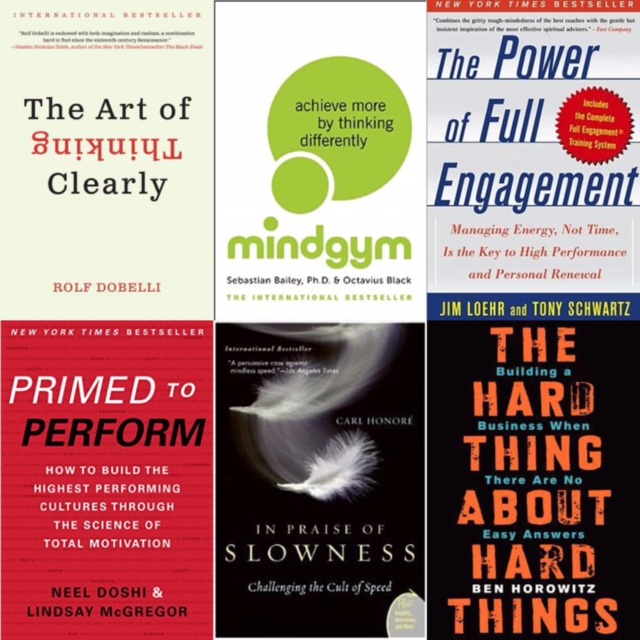
1. Carol Dweck: The Two Mindsets And The Power of Believing That You Can Improve
A summary of Carol Dweck’s book Mindset, which explores our two mindsets (fixed and growth) and how they impact not only our attitudes and learning but also our outcomes.
2. The Reasons We Work
It’s more complicated than money.
3. The Single Best Interview Question You Can Ask
“This question sounds easy because it’s straightforward. Actually, it’s very hard to answer. It’s intellectually difficult because the knowledge that everyone is taught in school is by definition agreed upon. And it’s psychologically difficult because anyone trying to answer must say something she knows to be unpopular.”
4. Albert Einstein on the Secret to Learning
“That is the way to learn the most, that when you are doing something with such enjoyment that you don’t notice that the time passes.”
5. Thinking About Thinking
This is the path, the rest is up to you.
6. Richard Feynman: The Difference Between Knowing the Name of Something and Knowing Something
The top people in the world understand that knowing the name of something doesn’t mean you understand it as Novel winner Richard Feynman explains in this article.
7. The Two Types of Knowledge
“In this world we have two kinds of knowledge. One is Planck knowledge, the people who really know. They’ve paid the dues, they have the aptitude. And then we’ve got chauffeur knowledge. They have learned the talk. They may have a big head of hair, they may have fine temper in the voice, they’ll make a hell of an impression.”
8. William Deresiewicz: How To Learn How To Think
An argument to spend more time thinking.
9. How Successful People Increase Productivity
“One thing that successful people do to increase productivity is they avoid to-do lists. These lists are rarely as effective as scheduling time.”
10. Academic Economics — Strengths and Weaknesses, after Considering Interdisciplinary Needs
This is the full text of Charlie Munger’s Herb Kay Memorial Lecture, ‘Academic Economics: Strengths and Weaknesses, after Considering Interdisciplinary Needs,’ at the University of California at Santa Barbara, 2003.
11. The Peter Principle and the Law of Crappy People
If you’ve ever worked in an organization, you’ve no doubt come across someone in senior management and asked yourself how they ever got promoted.
12. In Praise of Slowness: Challenging the Cult of Speed
We live in a world of scarce understanding and abundant information. We complain that we never have any free time yet we seek distraction. If work can’t distract us, we distract ourselves. We crave perpetual stimulation and motion. We’re so busy that our free time comes in 20 second bursts, just long enough for us to read the gist and assume we understand. If we are to synthesize learning and understanding we need time to think.
13. The Nine Primary Tactics Used to Influence Others
The number one thing to understand about influence is that people make decisions for their reasons, not yours.
14. Summer Reads for the Curious Mind
Out of the 44 books I read from January to June, here are the 7 that resonated with me the most
15. The Power of Full Engagement — Managing Energy, Not Time, is the Key to High Performance and Personal Renewal
Tony Schwartz and Jim Loehr argue that energy, not time, is the key to managing performance.
The post The Best of Farnam Street 2015 appeared first on Farnam Street.
]]>The post Farnam Street’s 2015 Annual Letter to Readers appeared first on Farnam Street.
]]>Most public companies issue an annual letter. These letters offer an opportunity for the people entrusted to run the company to communicate with the people who own the company.
I decided this would be a good year to start a similar tradition at Farnam Street. It’s not that I haven’t written annual letters before. As a board member and advisor, I’ve written a few in the past. However, I’ve never written you an annual letter before. There is no good reason for that. To a large extent, I consider you to be the owners of Farnam Street.
Investors, or owners, traditionally exchange money for shares in a company. I think your investment in Farnam Street is just as significant. You trust me with something far more valuable than money: your time.
For all of us, time is finite. That means we need to think about opportunity costs. Reading Farnam Street means you’re not doing something else. My job is to make sure your investment is getting an above-average return.
***
2015 was a record year in almost every reader-related metric for Farnam Street.
The number of Farnam Street readers increased dramatically. The time people spent reading a page (a good proxy for how interested people are in the content) increased. The bounce rate (a fancy phrase for the percentage of people who look at one page and then leave the site) decreased dramatically. In short, we had more people who read longer and looked at more pages.
We offered three public Re:Think Workshops (Leadership, Innovation, and Decision Making). This took a lot of effort from an amazing team. The quality of people who attend these events continues to blow my mind. One former Harvard Business School professor summed it up nicely by saying you won’t find a better crowd of people at a public event anywhere. The feedback for all of the events was positive with the exception of one person (over 100 positives and 1 negative – we’ll take it). I felt we were at risk of spreading ourselves too thin, so we’ve decided to pare down to two in 2016 (Decision Making in February, which is already sold out, and Innovation in the fall). We’ve opted to put Re:Think Leadership on hold for now. Additionally, we have 13 people coming to Re:Think Decision Making who have attended Re:Think workshops in the past (including 6 who are attending Re:Think Decision Making for the second time) — I can’t think of a better metric to help gauge success.
The Knowledge Project, a successful podcast, launched. The first few episodes have been downloaded over 100,000 times. The audio quality sucked at first — which is entirely my fault — so we’ve spent a lot of time and money getting that to a decent place. I can tell you firsthand, the quality of conversation doesn’t matter if people can’t hear it. We’re much better now, but there is still a lot of room for improvement.
Our first ever online product: How to Be Insanely More Productive launched (updated 2019: This is now available free for members). I remember being on a train coming back from Toronto when I first put this online. I figured this was a good place to start as I’m often asked to talk about productivity. I guessed about 50 people would sign up, and I’d get some good feedback on how to deliver an online course that delivered tangible results in people’s lives. I was blown away by the participation levels and extremely positive feedback. I still get emails almost weekly from people saying how it helped them gain control of their lives and spend more time with their family. However, similar to the first episode of The Knowledge Project, this webinar offered first-rate content in third-tier packaging. I had another webinar planned for September on How to Read a Book, but I delayed the launch until I could find the right people to help re-package and re-formulate the material into something much better.
***
Membership program and the economics of running an online media company.
Perceptive readers will note the change of perspective from “I” to “we” in recent posts and newsletters.
Farnam Street had reached the point where I couldn’t do the things I wanted to do long-term and still keep the day-to-day going. Despite having a team of people working hard to bring you events like Re:Think Decision Making, it’s largely been a one-person endeavor until now.
I had to decide between pursuing my goals short-handed, which limits what can be accomplished and growing with like-minded people who share my vision for Farnam Street. I chose the latter. And the first such hire started in November.
In late summer, I started courting Jeff Annello to work with me at Farnam Street full-time. Not only does Jeff exemplify the Farnam Street ethos but he’s a paragon of quality thinking. We’ve worked together in the past and had been waiting for another opportunity to do so.
Many people don’t realize that Farnam Street takes hundreds of hours and thousands of dollars a month to sustain — and that was before bringing Jeff on board.
For years, generous readers like you have supported Farnam Street with donations. Without exception, I’ve reinvested all of that money back into Farnam Street.
I wish all help came as cheap. Jeff and his new fiancé, as you can imagine, don’t fully subscribe to this long-hours, no-salary package.
This was the impetus that led me to Re:Think the donation model. While I haven’t done away with donations, you can still contribute that way if you wish, I’ve opted to focus on a membership program.
Online media properties, as you probably know, are going through a bit of a rough patch as they look for ways to create and capture value. The problem, from a reader’s perspective, is that most of these organizations want to capture more value than they create — they focus on the wrong side of the equation. This leads to a short-term engagement between creator and audience, as the latter realizes they’ve been had.
Farnam Street takes the opposite approach: Add so much value that people want to support it. Our goal is to be so good that having a membership becomes a no-brainer, while at the same time, using some of the proceeds from paid membership to improve the free areas of the site.
The vast majority of content will always be free, and you can expect the free content to increase in quantity and quality as we head into 2016. If you find value in Farnam Street, we hope you’ll consider contributing either through an individual or corporate membership.
One thing I want to make clear is that, although I’ve done a good bit of the work to date by myself, Farnam Street is a team. There is no way we would have gotten where we are without the wonderful support of a few key people who wish to remain behind the scenes. These people play more of a role than you can imagine and we all owe them our thanks.
I also want to thank our lead sponsor for 2015, Greenhaven Road Capital and our two lead sponsors for 2016: Slack and Siebels Asset Management Research. It’s not too early to start thinking about 2017. If you’d like to inquire about sponsoring the blog, please get in touch with me.
***
We will continue to work hard every day to offer readers and members more value in 2016. That’s not an empty statement. Allow me to explain. Here is what you can expect and hold us accountable for in 2016:
The quality of all content will be much higher. We will do better at adding context, presenting ideas in compelling ways, adding tools to your mental tool box, making things practical, and exposing you to mental models that will help you be better at what you do. We’ll further our exploration of what it means to live a meaningful life and deepen our understanding of ourselves and the world.
The Re:Think workshops will offer a better experience. While everyone has described their experiences so far as off the charts, I see so much room for improvement that it’s hard to fathom how we’re exceeding expectations. Everything from onboarding and hotel options to the overall experience while at the event will be improved. We have an amazing team in place for the events. They consistently sell out.
The audio quality on the podcast will be much improved. I’ve already taken care of this to a large extent. Where possible, I’ll do more in-person interviews as this offer more meaningful and deeper conversations.
The experience of existing readers will not be compromised to add new readers. For a large part of the year, there was an annoying little pop-up that appeared on the screen asking for your email address. This was a mistake. While it helped us grow at about 2500 readers a month, it’s annoying to some and degrades the reading experience for all. You deserve better. I fumbled here and hopefully recovered. I was aware of how annoying it was and failed to act. The allure of 100,000 readers is a strong pull — especially when my mother reminds me that her “small town” (my words, not hers) has more people than I have readers. Anyway, the pop-up is off now.
The site will function better. We will be seeking to engage a web designer in 2016 or 2017 to redesign the site to improve navigation, organization, and the overall reading experience. This is more about finding the right person or team to work with us and less about the year in which it happens.
Products will exceed your expectations. We have two new things slated to roll out in 2016 — a mini-course in January on How to Read A Book and a project I’ll reveal when the time is right. To help ensure we’re delivering at the quality and caliber you deserve, we’ve invested in hiring the right people to help design, develop, and deliver these courses. I hope you’ll offer your honest feedback.
***
We have no idea what tomorrow will bring, so we try to prepare for an uncertain future. I show up to the office every day looking for opportunities to move forward in the best way I can. That’s usually putting one foot in front of the other and trying to make incremental progress without regressing.
Thank you for your time and trust,
Shane
The post Farnam Street’s 2015 Annual Letter to Readers appeared first on Farnam Street.
]]>